
The welted construction method (Goodyear welted)
Goodyear-welted shoes nowadays stand for quality and durability in the shoe industry. Here you can find out which variants of Goodyear welting are out there and to what extent, in my view, label fraud is being committed.
Introduction
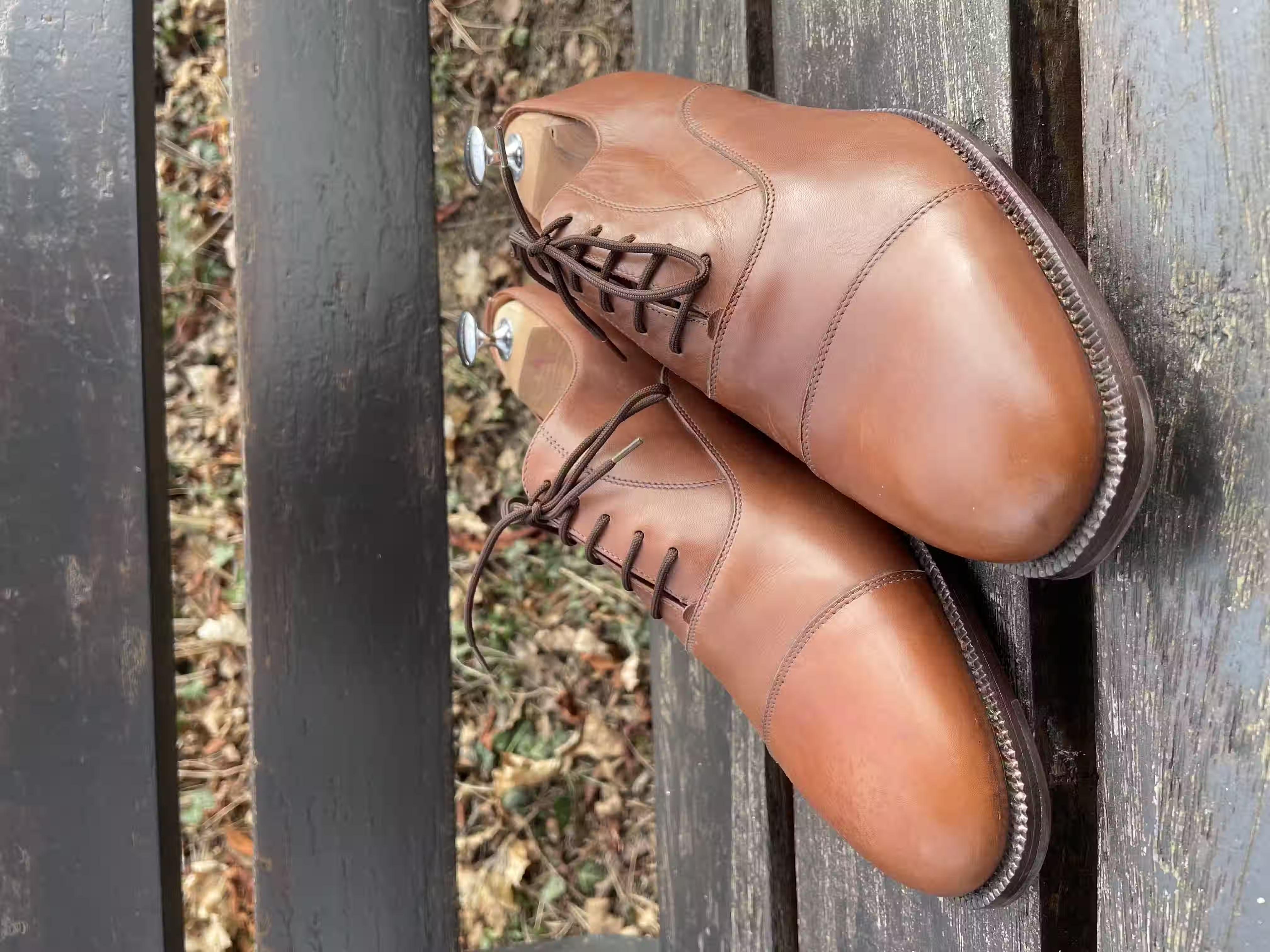
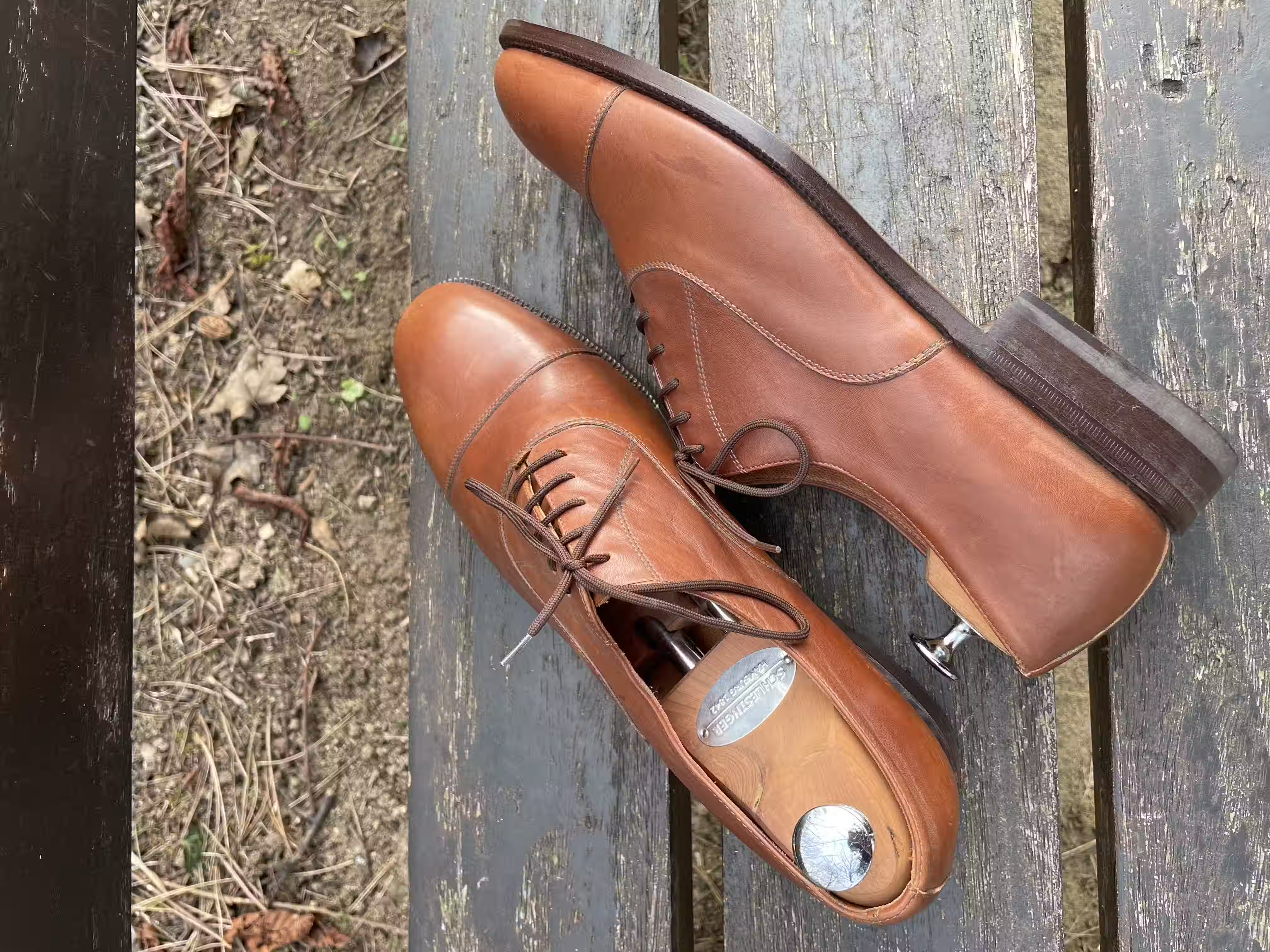
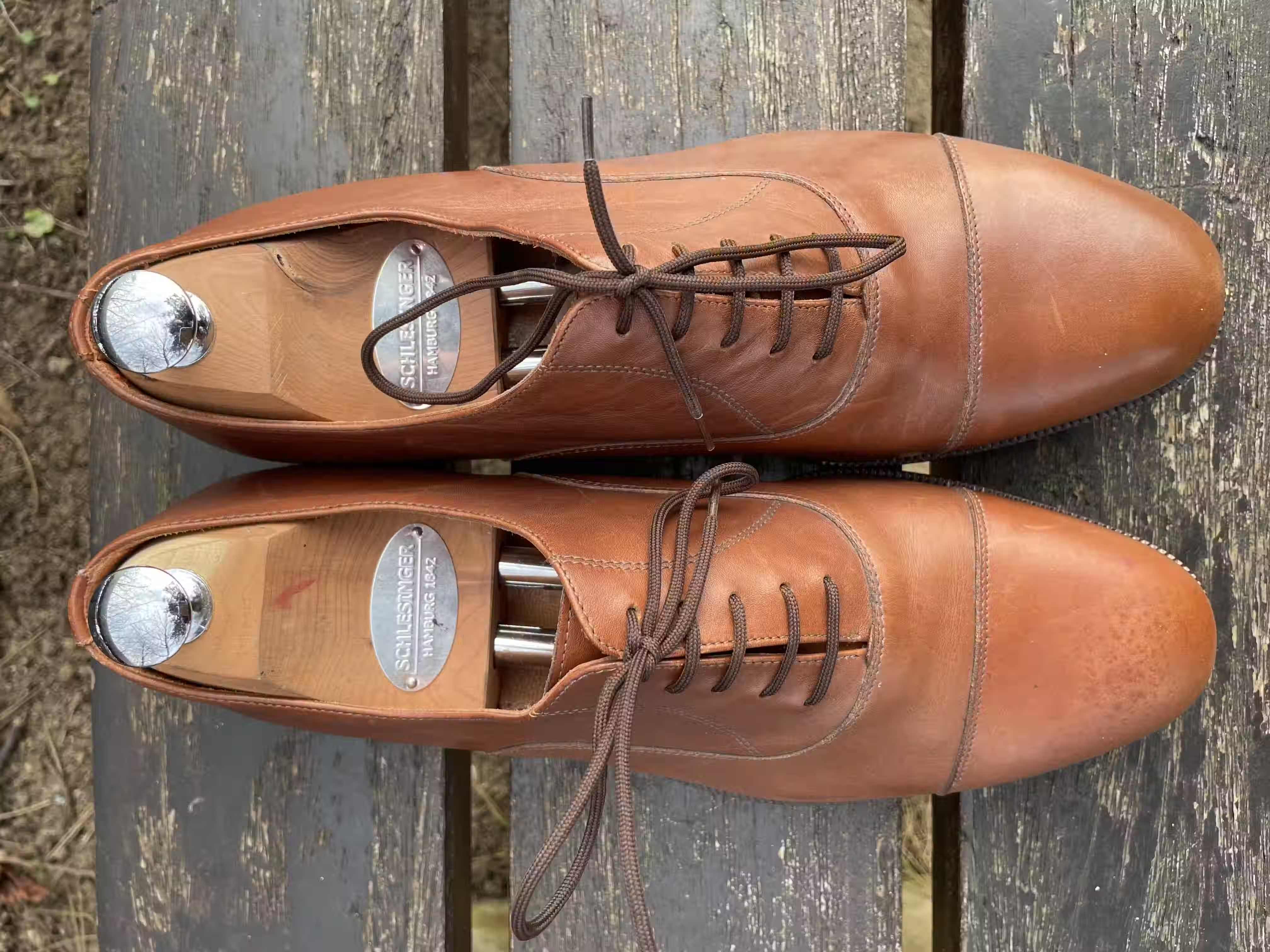
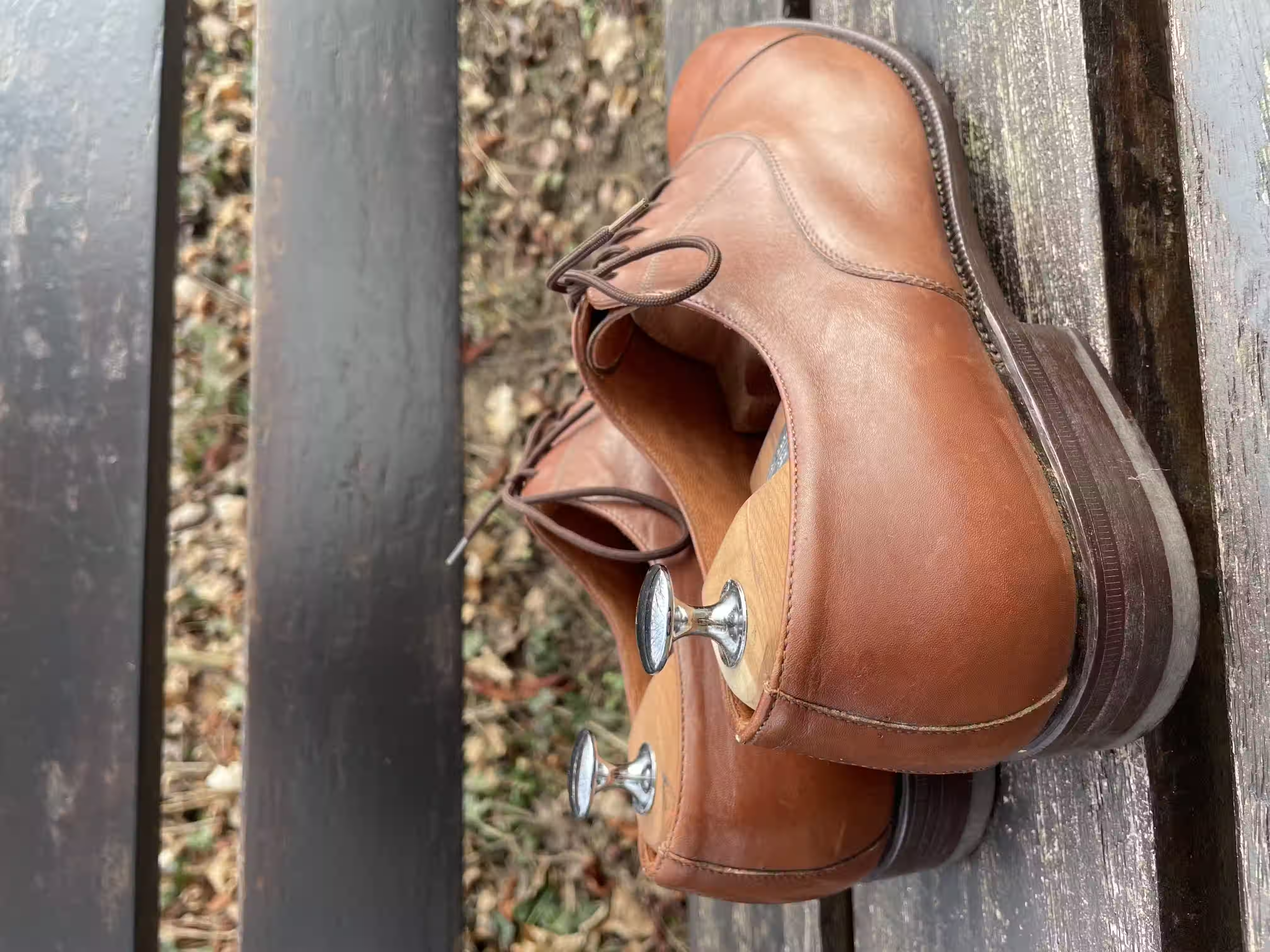
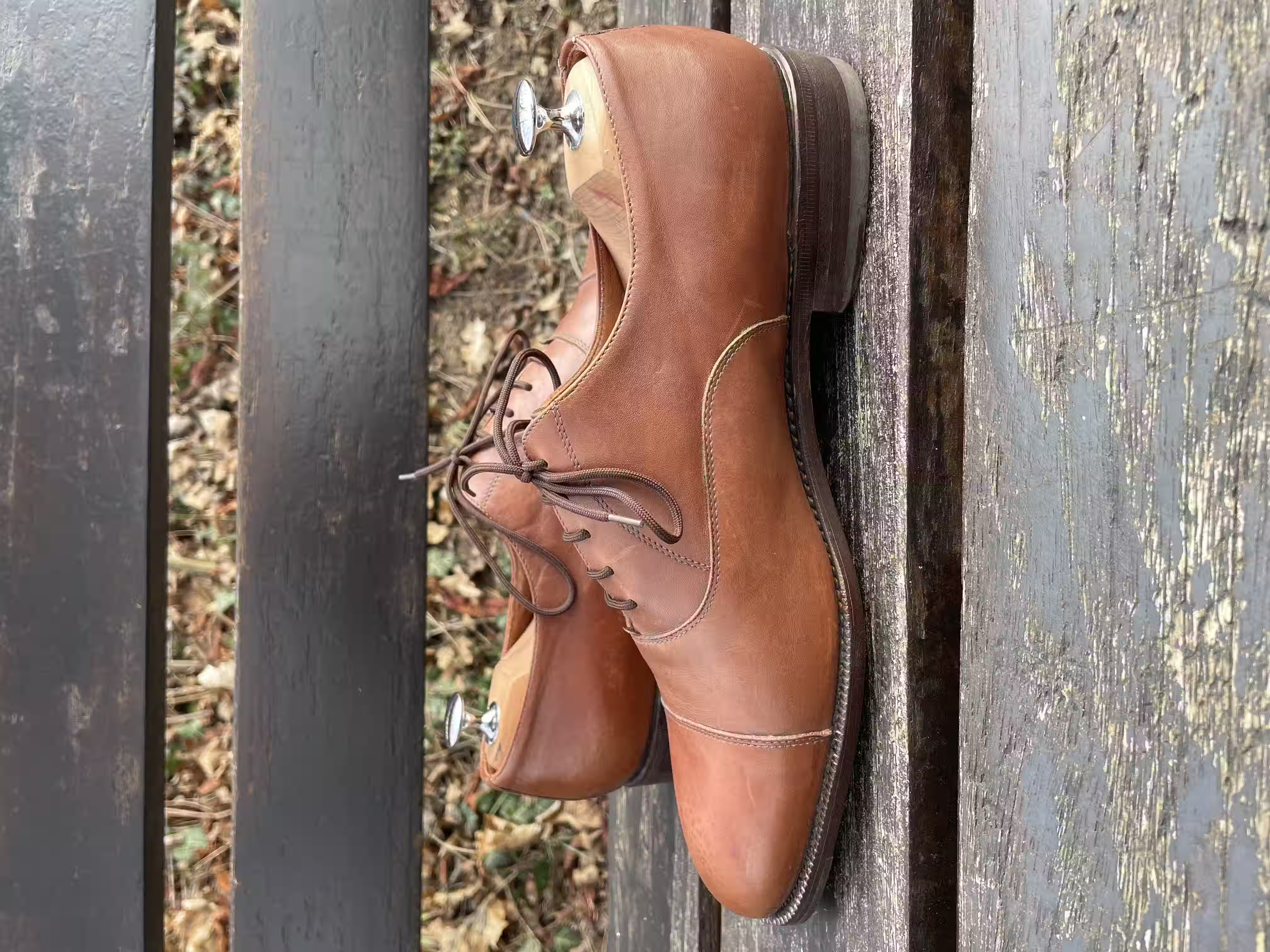
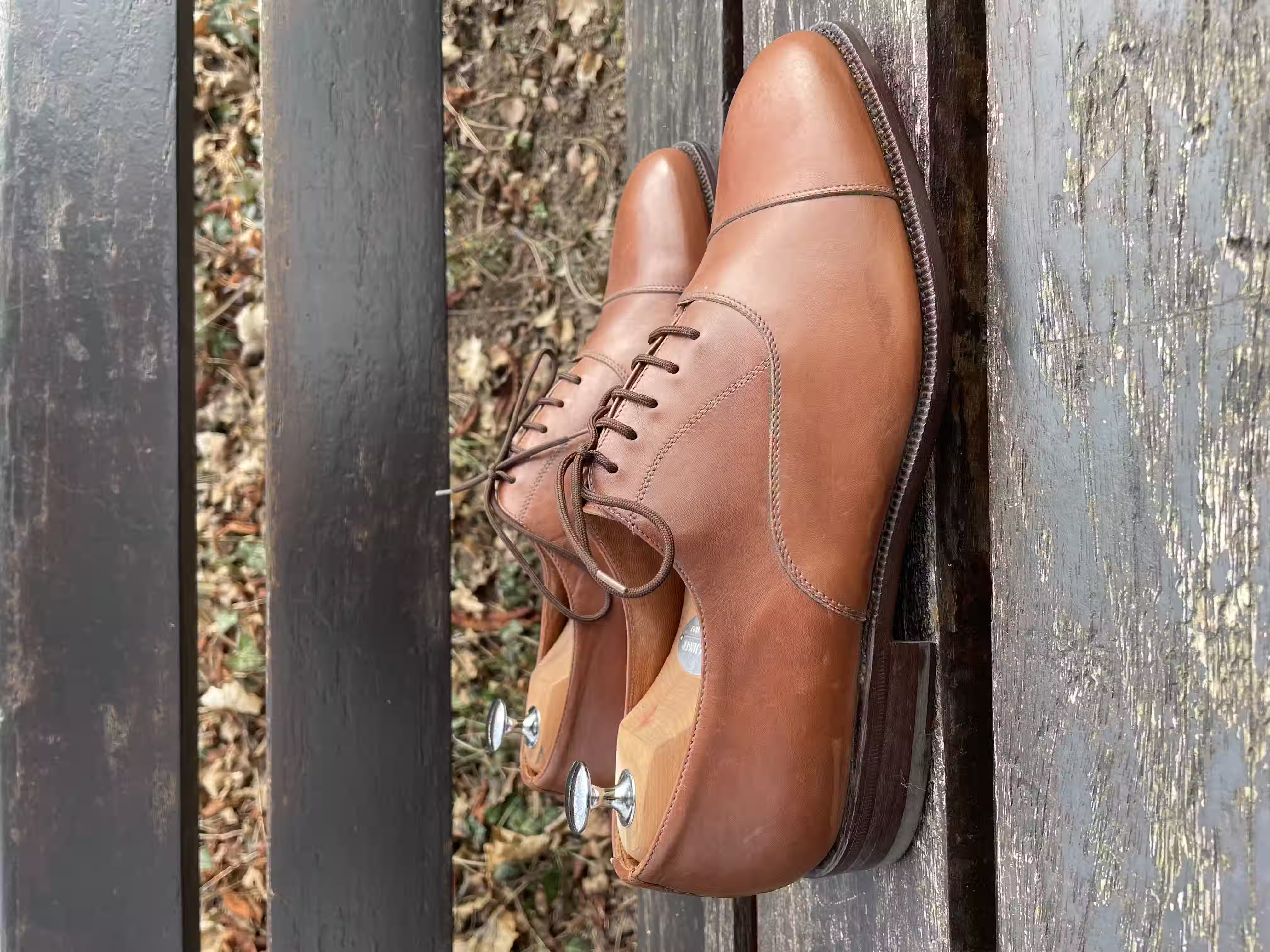
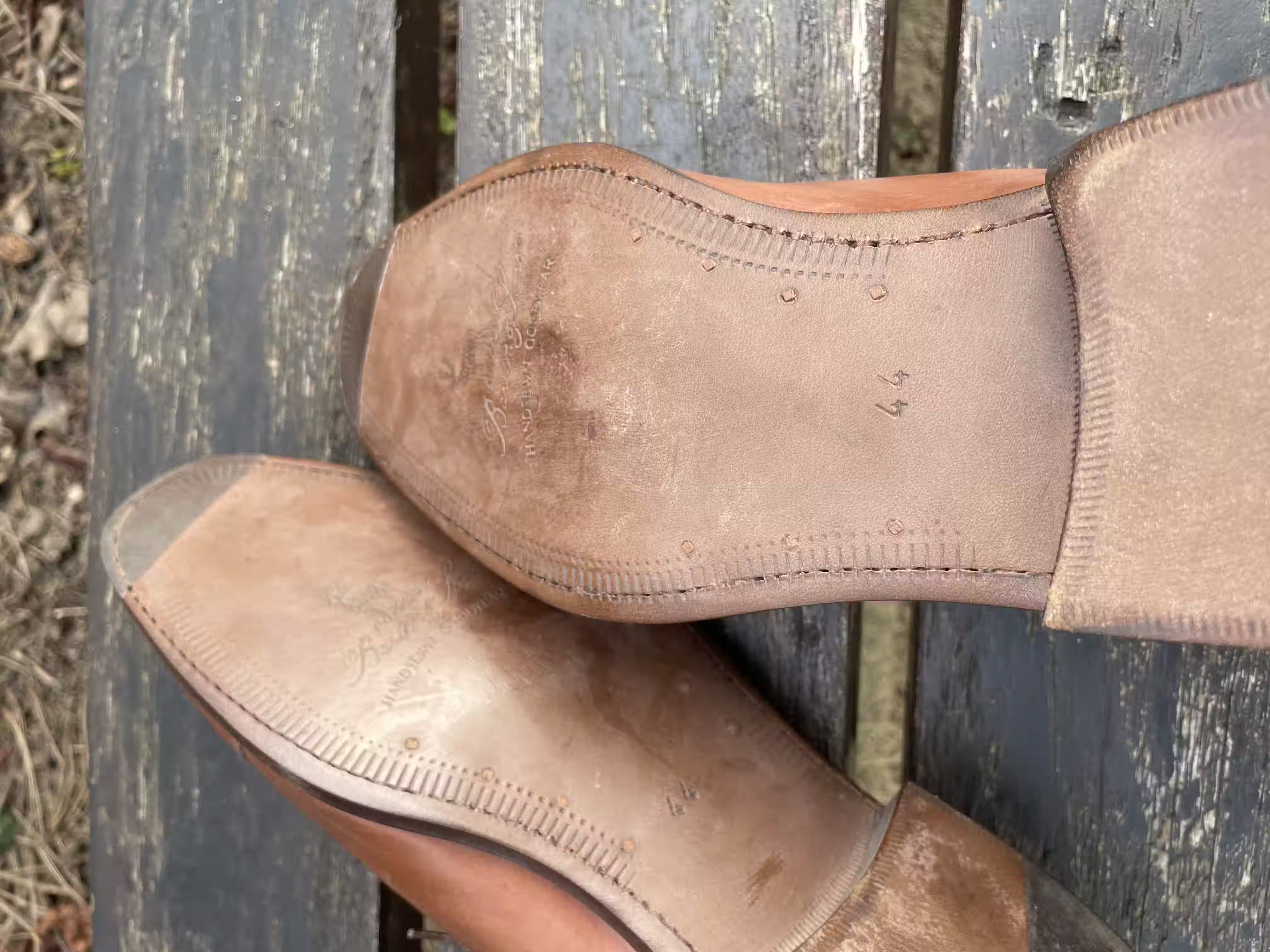
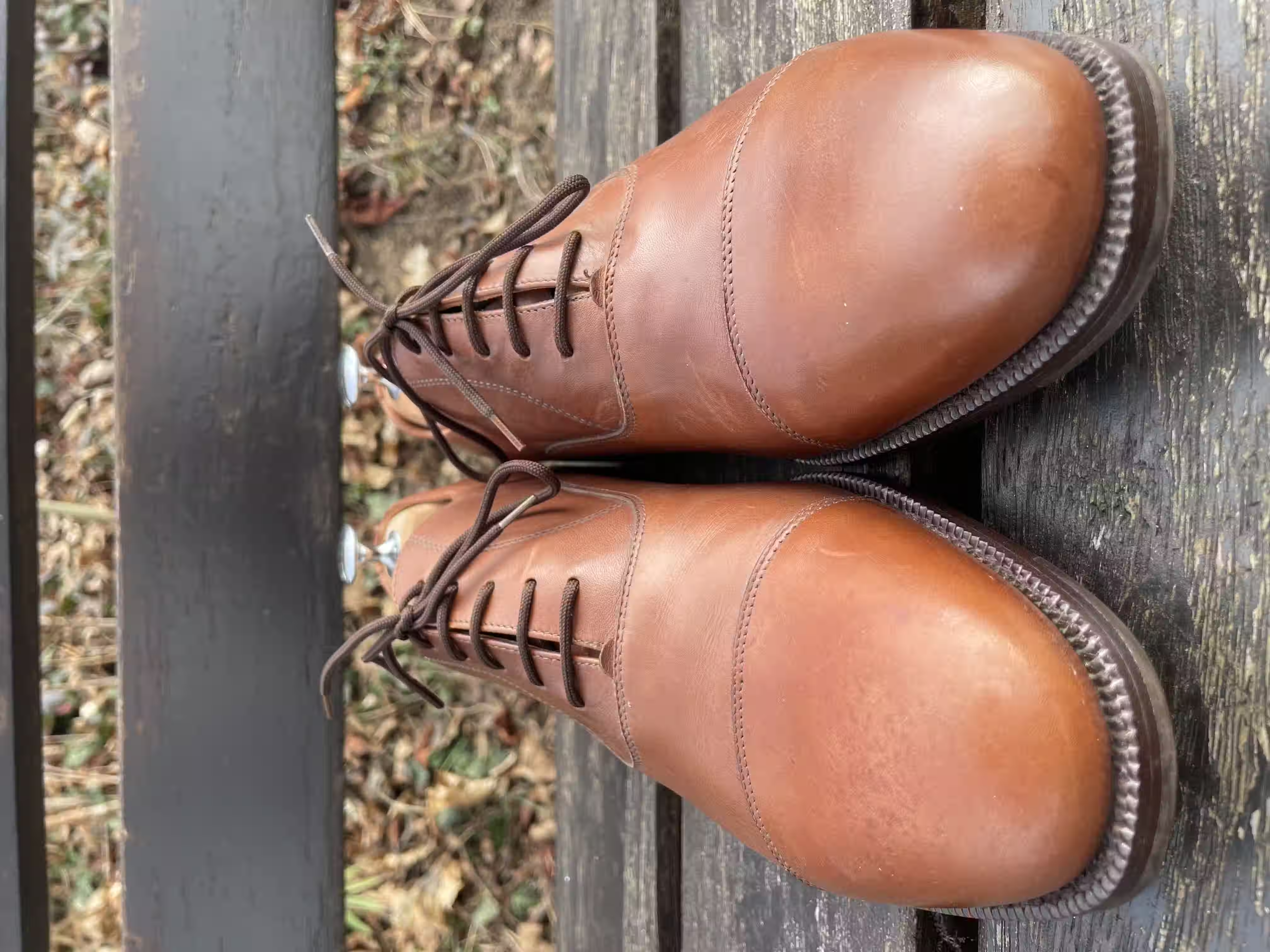
Originally, Goodyear-welted shoes were made by hand, before the first machines appeared in the 19th century that took over stitching together the insole, upper, and welt. These machines were significantly further developed by employees of Charles Goodyear Jr., and that is where the name comes from. Nowadays, the term “Goodyear” is often used synonymously in connection with Goodyear-welted, regardless of whether the shoe parts were stitched together by hand or with a machine. Of course, machine production with the Goodyear machine dominates today; it was gradually further developed and significantly shortened the manufacturing process. However, Goodyear-welted shoes are still made by hand, for example in bespoke shoemaking or by some shoe manufacturers that offer hand-made ready-to-wear shoes.
The word “welted” contains the welt in its name: this is a strip of leather that is sewn to the insole and the upper. It ultimately carries the outsole, because the outsole is sewn to this welt in one of the steps. However, this welt is not the only defining feature of the welted construction method. Otherwise there would be no other construction method that also works with a welt. Because there is at least one other such construction method—namely a variant of the stitched-through construction method (Blake-Rapid).
Basic procedure in the welted construction method
Step 0: Starting situation
We are in the situation where the upper is already finished and pulled over the last. The insole is also already temporarily nailed to the last, and a strip of leather, called the welt, is prepared and within reach. In the following, we look at the method by hand, which the machines essentially only imitate.
Step 1: Piercing and stitching together the insole, upper, and welt
In contrast to the so-called Blake-Rapid construction method with welt, in the welted construction method the insole is not pierced through; instead, it is prepared beforehand so that the seam can be pierced relatively flat from the side. Traditionally, a so-called stitching ridge is ground around the insole, which has the necessary height so that the seam can pass through well from the side. This seam is also called the stitching seam. In the end, the insole remains completely without holes, because the piercing happens only on its surface—which is no longer flat due to the stitching ridge. In regular alternation, in addition to piercing, the subsequent stitching of the insole with the upper and welt also takes place.
Step 2: Applying the cork filling and the shank
After the welt is attached around the outside of the insole, a hollow space has formed in the center. This hollow space is enclosed by the welt and the insole. It is relatively flat and has the thickness of the welt.
This hollow space is now usually filled with cork. However, leather scraps can be used instead. A shank made of wood or metal is also placed into this hollow space in the middle. This is a flat, roughly rectangular piece of the respective material and serves to stabilize the shoe.
Step 3: Attaching the outsole and stitching together the welt and outsole
In the last step, an outsole is placed on top of the welt and the filling layer and stitched to the welt—viewed from the underside. The stitching is done with the so-called outsole seam, which is usually visible from the outside. So you cannot tell from the outside whether a shoe is Goodyear-welted. Because the outsole seam visible from the outside also exists in the Blake-Rapid construction method, for example.
Attaching this outsole is also called soling, and a shoemaker can do it by hand or with the help of a sole-stitching machine. Such a sole-stitching machine generally differs from the Goodyear machine from one of the previous steps and can also be used for soling in other construction methods. So this step here is not very specific only to Goodyear-welted shoes. However, it must be added here that a Goodyear machine can also sole the shoes, so that a shoemaker does not necessarily need another machine here.
Glued-and-stitched construction method, the cheaper relative of the machine-welted construction method
In the traditional Goodyear-welted construction, a gemming rib is carved into the insole so that the stitching can pass through it and the insole does not have to be pierced. Since the 19th century, however, there has been a trend toward automating processes with machines so that everything can be done even faster. And creating the gemming rib could also be done by machine—but far from optimally: the gemming rib was quite thin, and especially in the toe area, where more seams come together, it could easily tear. So initially the gemming rib was reinforced there with glued materials so that nothing would tear during machine stitching and beyond.
At some later point, this process took on a life of its own when the entire gemming rib was completely replaced by what is known as gemming tape. Unlike the gemming rib, this gemming tape is not part of the insole and is instead simply glued onto the insole. At the end it stands about as high as a gemming rib, but overall it is designed so that the Goodyear machine can very conveniently join the gemming tape, the upper, and the welt together with the inseam.
This means in particular that the insole is not sewn directly to the upper and the welt, but only indirectly via the gemming tape. And between the insole and the gemming tape there is only a purely glued connection, which is therefore potentially not quite as stable. This crucial point is the reason why, strictly speaking, this is a different construction method. You can do it this way to reduce costs, but in my view you should then not speak of Goodyear-welted shoes, but of glued-and-stitched shoes. Nevertheless, unfortunately this is not done, and probably the vast majority of shoes advertised as Goodyear-welted are of this glued-and-stitched type—even in the premium price range for ready-to-wear shoes.
How can you recognize Goodyear-welted shoes?
Unfortunately, there is no reliable method by which you can recognize Goodyear-welted shoes from the outside. To be completely sure, you would have to cut the shoes open and, on the underside of the insole on the inside, see the gemming rib and the inseam that connects the insole, upper, and welt.
But you can take advantage of the fact that Goodyear-welted construction, besides stitchdown construction, is the most widespread non-glued construction. So if you can rule out that the shoes are stitchdown, then they will very likely be Goodyear-welted—provided, of course, you know they are sewn leather shoes and not glued ones.
I can recommend the following two criteria, whose presence suggests Goodyear-welted shoes:
- The shoe has a welt with a visible seam on top that is not purely decorative, but connects the welt and the outsole. Sometimes you can also see this seam in the area of the outsole, but it can also be hidden in the outsole.
- The shoe has no thick seam inside the shoe that goes through the insole.
The first point tries to ensure that the shoes are not merely glued, and the second point tries to exclude stitchdown shoes as a possible option. Unfortunately, both points can sometimes apply to shoes that still are not Goodyear-welted or that are made using the glued-and-stitched construction. You can ask the manufacturer about the latter point or research the manufacturer in this regard. Sometimes markings are also applied to the shoe such as “Goodyear welted”.
Variants
Black ostrich-leather shoes in Goodyear-welted construction
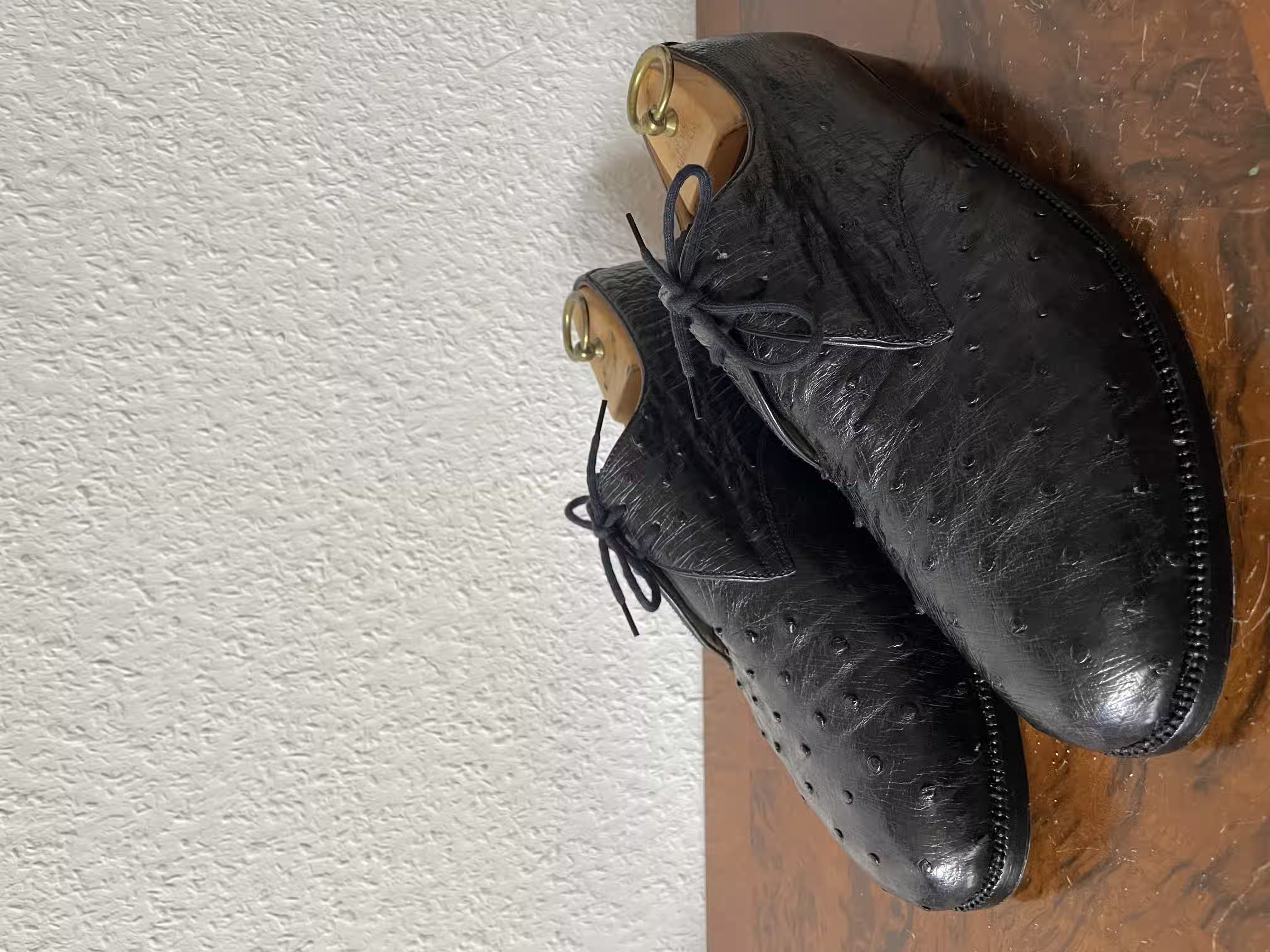
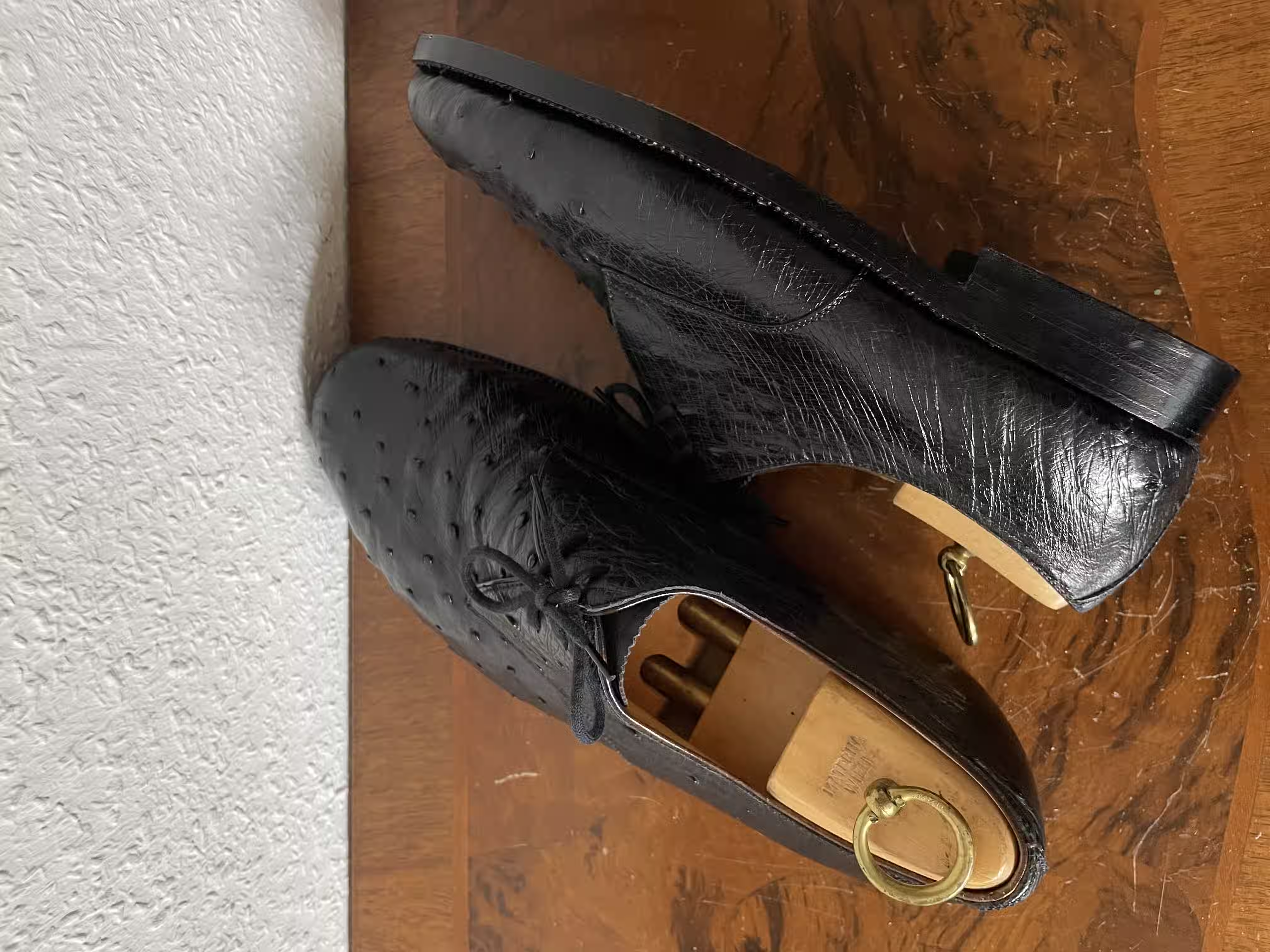
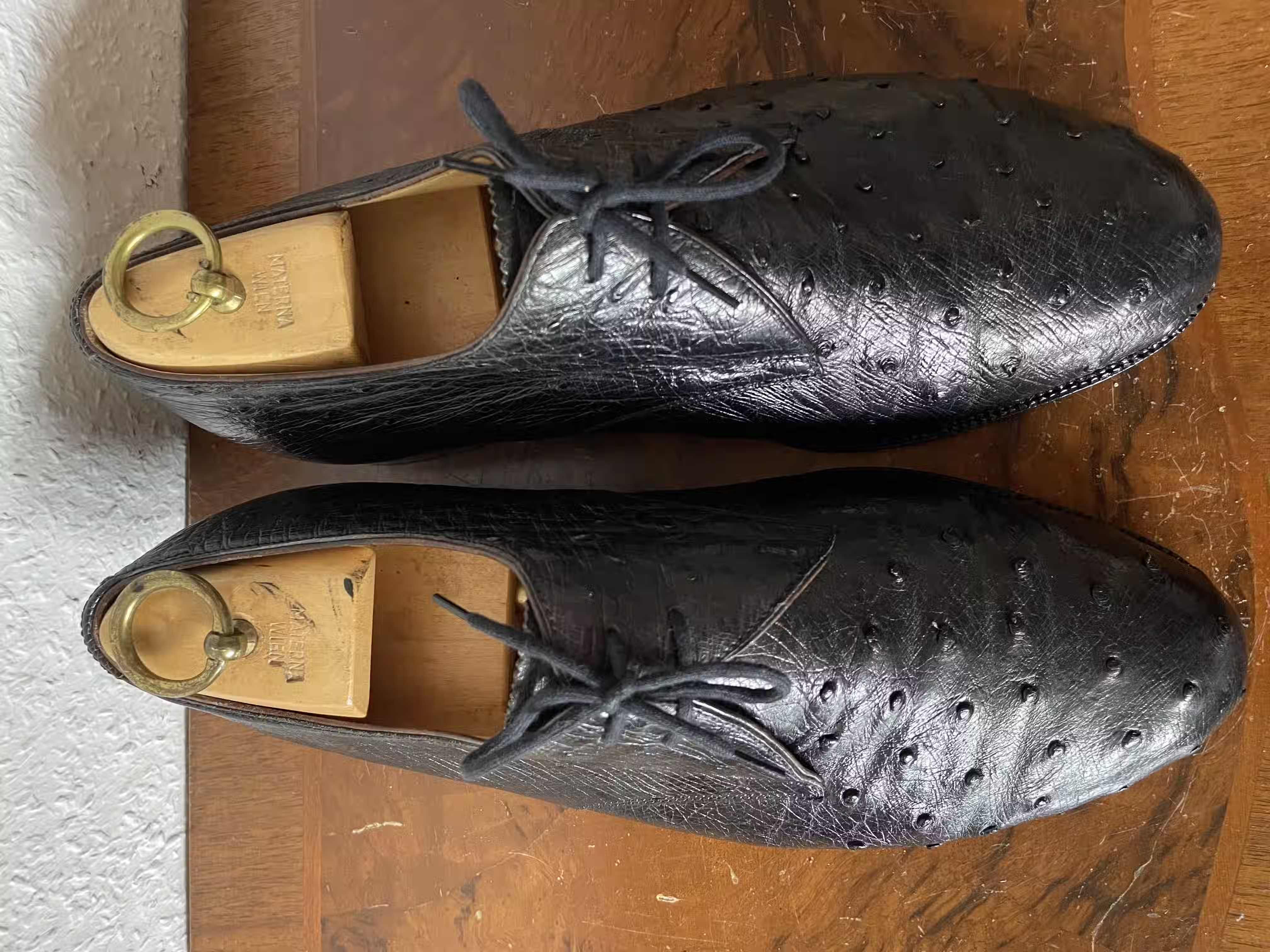
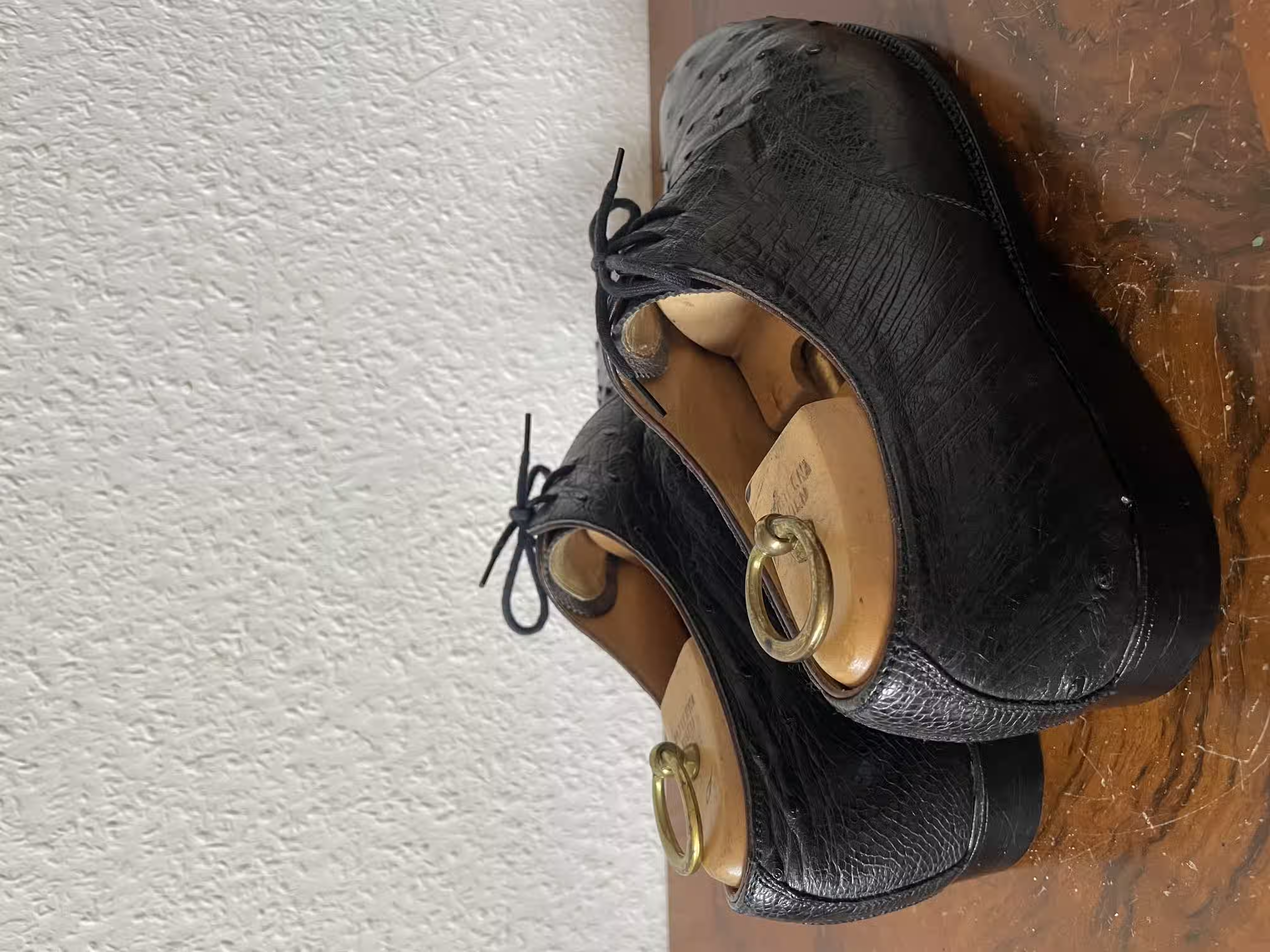
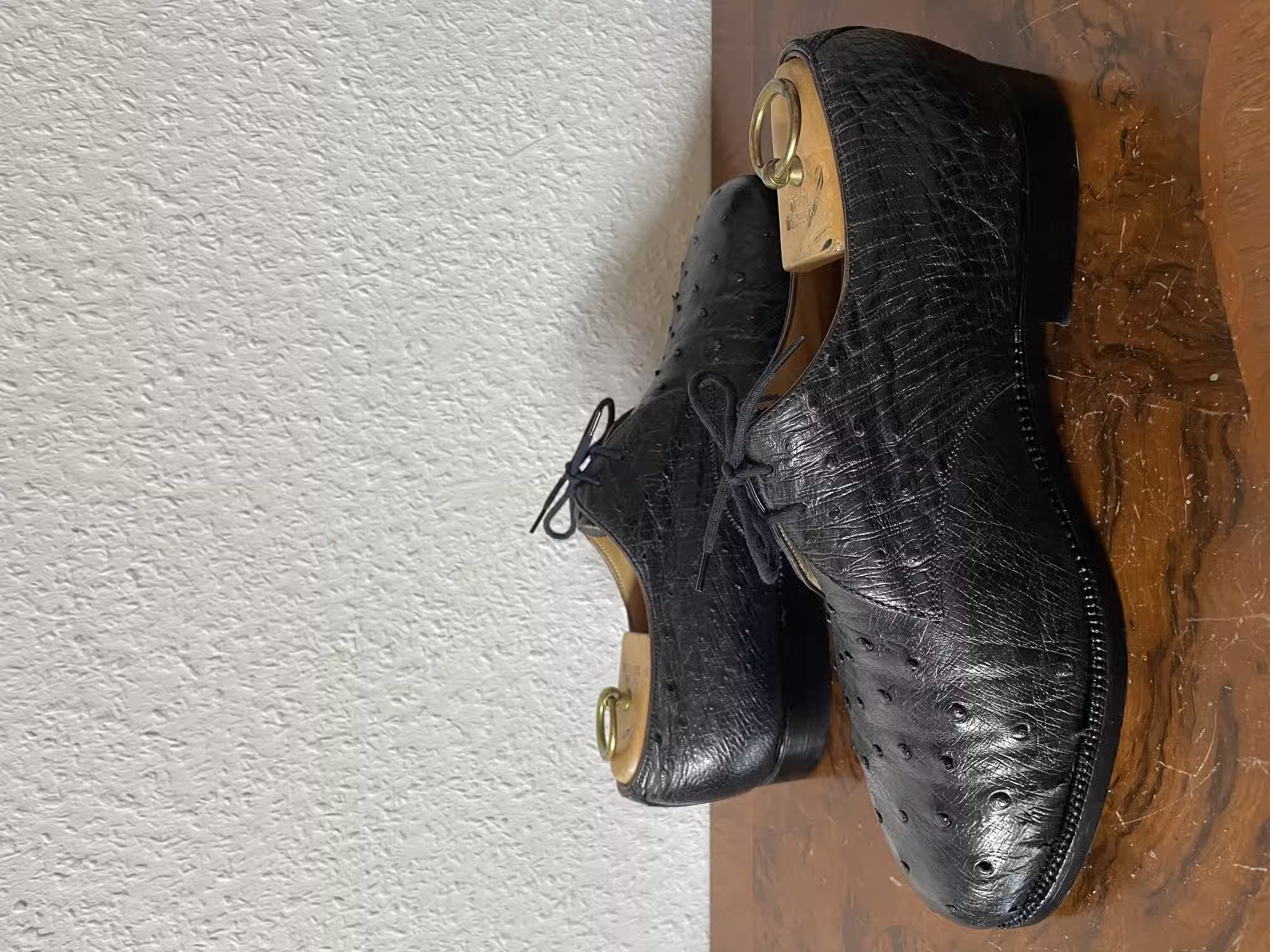
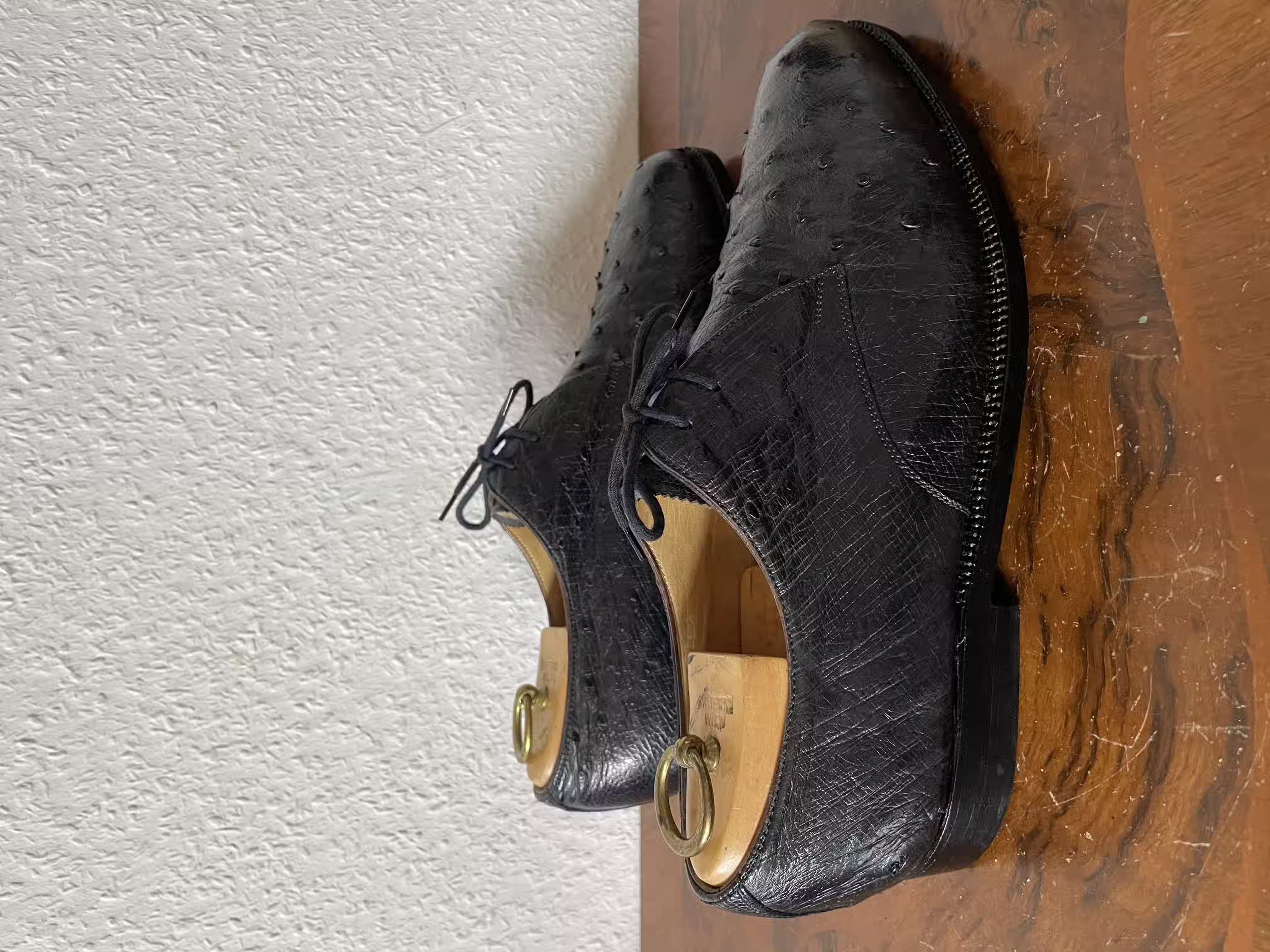
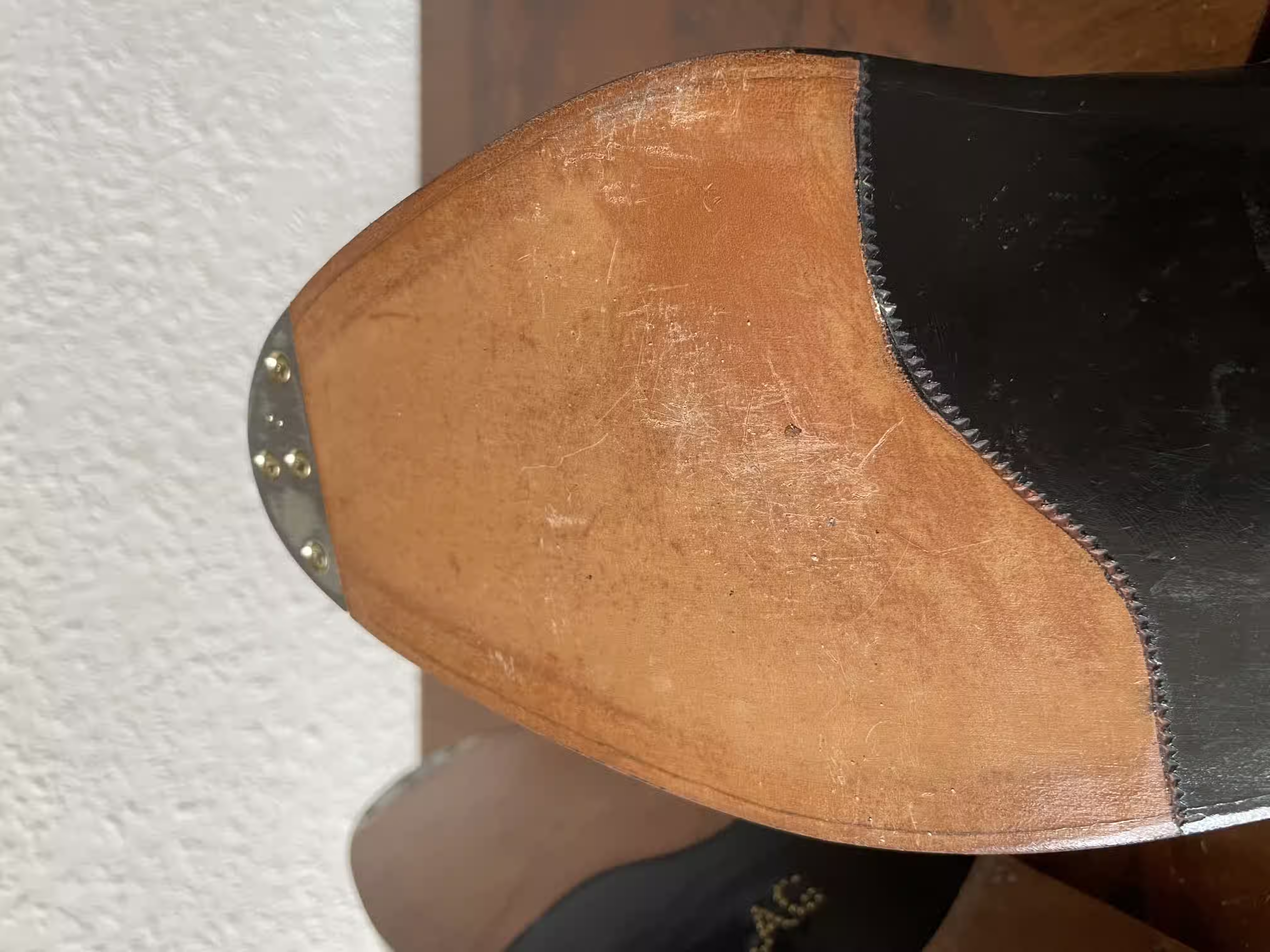
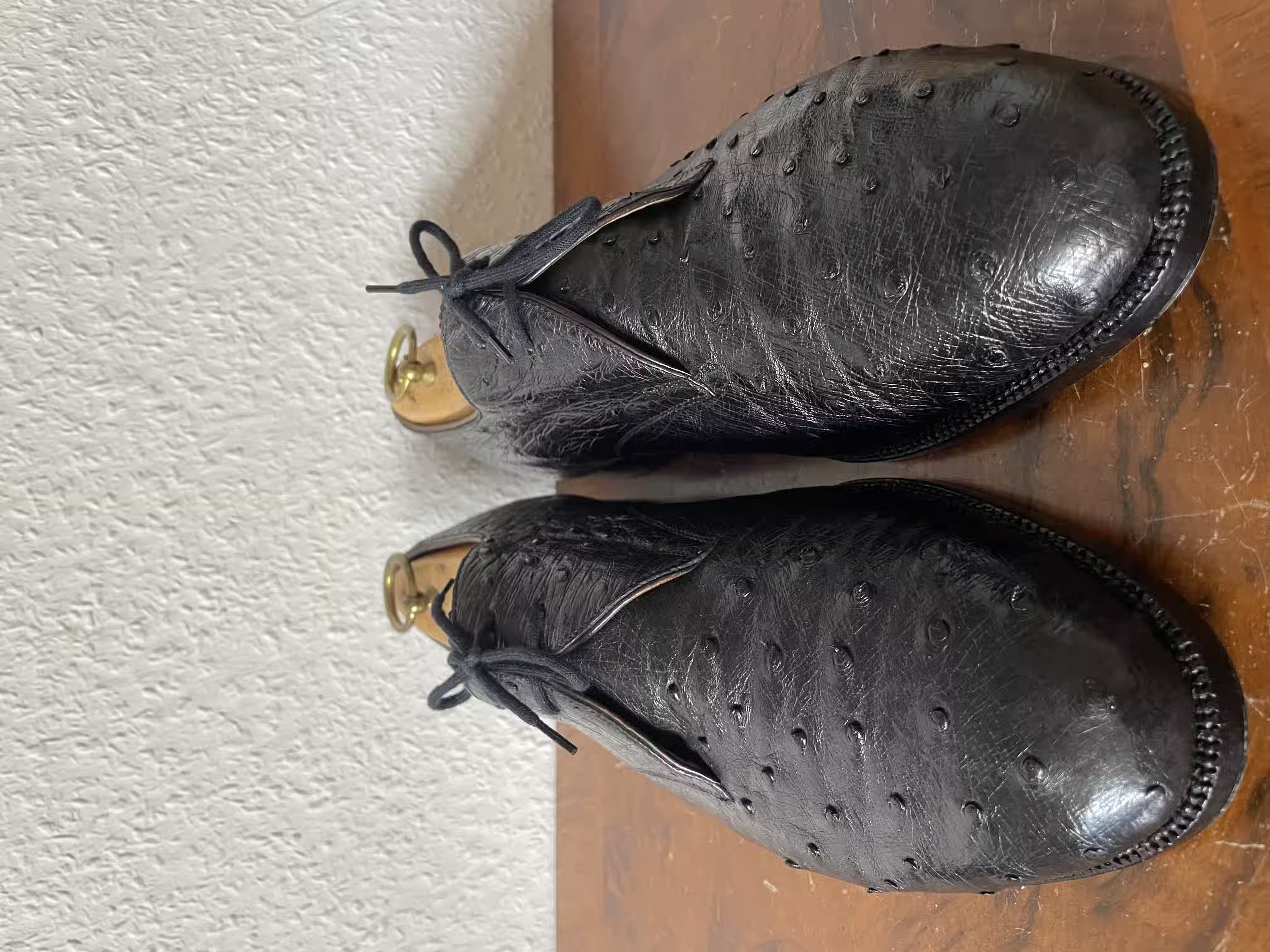
Although this shoe is completely black from the outside, you can still perceive different variations of black. For example, on the welt you can see many small gray-looking dots that suggest a seam. This is also confirmed by the outsole, because there is a slight line running all the way around, indicating the presence of a channel deeper inside. In this channel lies the outsole seam that you could already see on the welt.
By the way, on the inside of the shoe no seam can be seen that goes through the insole. So with these shoes you can be relatively sure that they are Goodyear-welted shoes. Additional confidence comes from knowing that the manufacturer is an old, renowned shoe company from Vienna, whose care in workmanship you can admire, for example, on the outsole. For such a manufacturer of premium shoes, it is also unlikely that it offers shoes made purely with glued construction—especially because its focus is on craftsmanship and not on brand name and advertising.
